


For some industries like travel, beauty and fashion, the advent of social media has been a marketing match made in heaven.
Brands have cashed in on the narcissistic post and boast culture we now live in, offering endless competitions to win ‘money can’t buy’ prizes in exchange for likes, shares or tweets on Facebook, Instagram or Twitter.
For others the relationship with social media has been less harmonious or practically non-existent.
Sectors such as finance and insurance have been slow to dip their toe into what they perceive to be piranha infested waters.
Thinking ‘dabbling’ in social media is equitable to customer service suicide.
For the healthcare industry the debate about whether social media is ethical or relevant has been rumbling for some time. Should it be used by healthcare professionals? And if so, to what extent?
The British NHS has embraced Twitter as a broadcasting channel under its @NHSChoices address. It sticks to lifestyle and healthier living tips but strictly does not offer patients any diagnostic advice or help on this channel – instead referring them back to the 111 telephone number.
Using sunscreen is an important part of protecting yourself from skin cancer. Do you know how to apply it properly? http://t.co/tZeegFgk3C
— NHS Choices (@NHSChoices) July 19, 2014
Research conducted by PwC’s Health Research Institute, back in 2012, revealed that patients are now seeking answers to their healthcare concerns on social media to self diagnose, get a second opinion on a recently diagnosed illness or to gain support from people suffering from the same conditions in the wider community.
Its survey also found that 80% of individuals between the ages of 18-24 would be likely to share health information through social media.
The public is using social media. Should healthcare companies use it too?
Yes:
1. It’s a great way to broadcast a public health message to a wider audience
Earlier this summer Sanctuary Health used Twitter to raise awareness of #dieticiansweek as part of a wider campaign led by the British Diabetic Association.
The Trust a Dietician campaign was designed raise the profile of qualified health professionals that assess, diagnose and treat dietary and nutritional problems at an individual and wider public health level.
2. It can be used effectively to gain feedback from patients
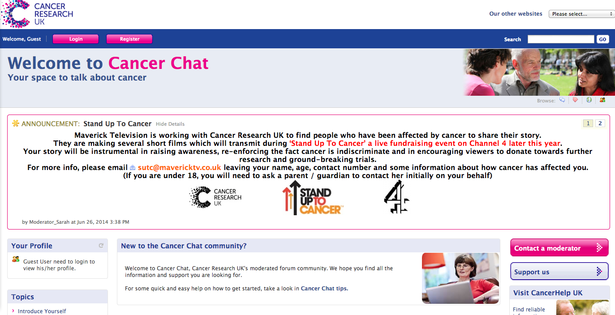
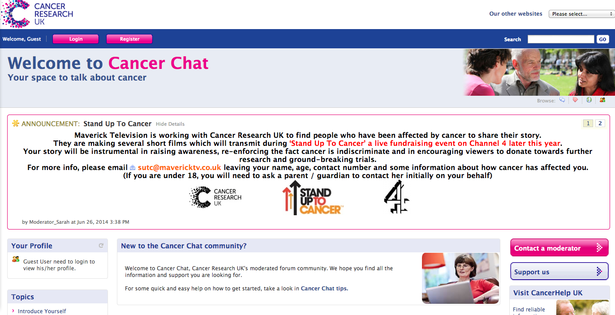
Cancer Research UK works across three social media platforms, including its specially created Cancer Chat.
Cancer Research listens and monitors all its social media channels and with the information it gathers it informs and influences its policies and campaigns.
3. Allows for greater individual patient, carer and citizen involvement in services.
The Brighton & Hove Maternity Services Liaison Committee (a group run by parents for parents) set up a Facebook page to answer people’s questions and help them get the best from their local maternity services – putting them in touch with health specialists or passing their feedback on to healthcare professionals.
No:
1. It raises data protection issues and jeopardises patient confidentiality
The NHS has had to take legal action after some of its employees were found having inappropriate conversations about patients and colleagues on Facebook and even uploading photos from private patient records.
2. Could undermine the reputation of the healthcare professional
The BMA and the Nursing and Midwifery Council (NMC) have both issued guidance to doctors and nurses warning them not to accept friend requests from patients.
It said that medical professionals should be wary of who could access their personal material online, how widely it could be shared and how it could be perceived by their patients and colleagues.
3.There is an inequality of access to the internet
Reaching vulnerable people, such as the elderly or those who do not have access to the internet, raises concerns about equality of access to information. The Cabinet Office Minister, Francis Maude, said recently that people who are offline risk losing access to crucial government services.
As social media is becoming embedded in our daily lives it will be hard to ignore its presence. As with any new method of communication there are pros and cons to using it.
It’s a great way to signpost to related healthcare services, to provide information or community support for those unable to leave their homes. It is also less resource intensive than traditional engagement techniques.
But there are massive ethical concerns about use of personal data collected from those monitoring conversations being had online. Plus, there is room for abuse and those using social media may breach the patient confidentiality laws we enjoy.























No Comments