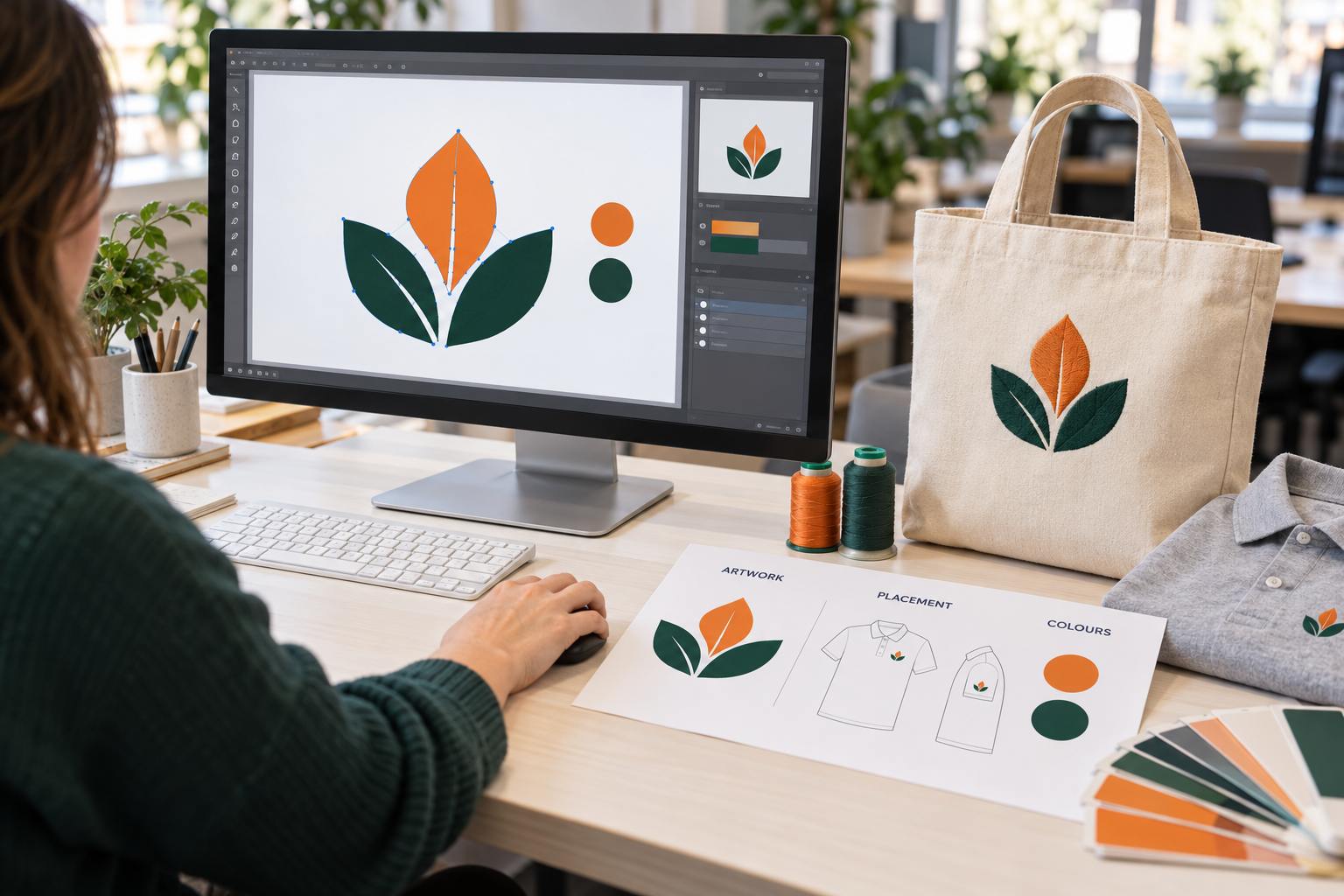


Promotional product distributors should give embroidery suppliers an approved logo, the final embroidery size, exact product details, and clear color instructions. The supplier also needs to know who will approve the sample and when approval is due. Sending these details together helps prevent questions from holding up production.
A clean logo is only the starting point. Embroidery digitizing services turn artwork into instructions that control how a machine stitches the design. Those instructions must suit the item being decorated. A complete brief lets your supplier assess the job before you commit to a delivery date.
Start with the approved logo artwork
Ask the customer for the original logo file and confirm that it is the current, approved version. Brand guidelines are useful when the customer has rules about spacing, colors, or acceptable logo variations.
If your supplier accepts them, send vector artwork such as AI, EPS, or SVG. A vector PDF can also be useful, although a PDF may contain only a blurry image. A sharp PNG or JPEG may be sufficient for digitizing, depending on the design. Ask before paying to redraw artwork unnecessarily.
Keep the editable original. If requested, send a separate copy with text converted into shapes so missing fonts cannot change the lettering. Include a simple preview showing the intended appearance. Enlarging a small screenshot does not recover missing detail.
Specify size and placement for each product
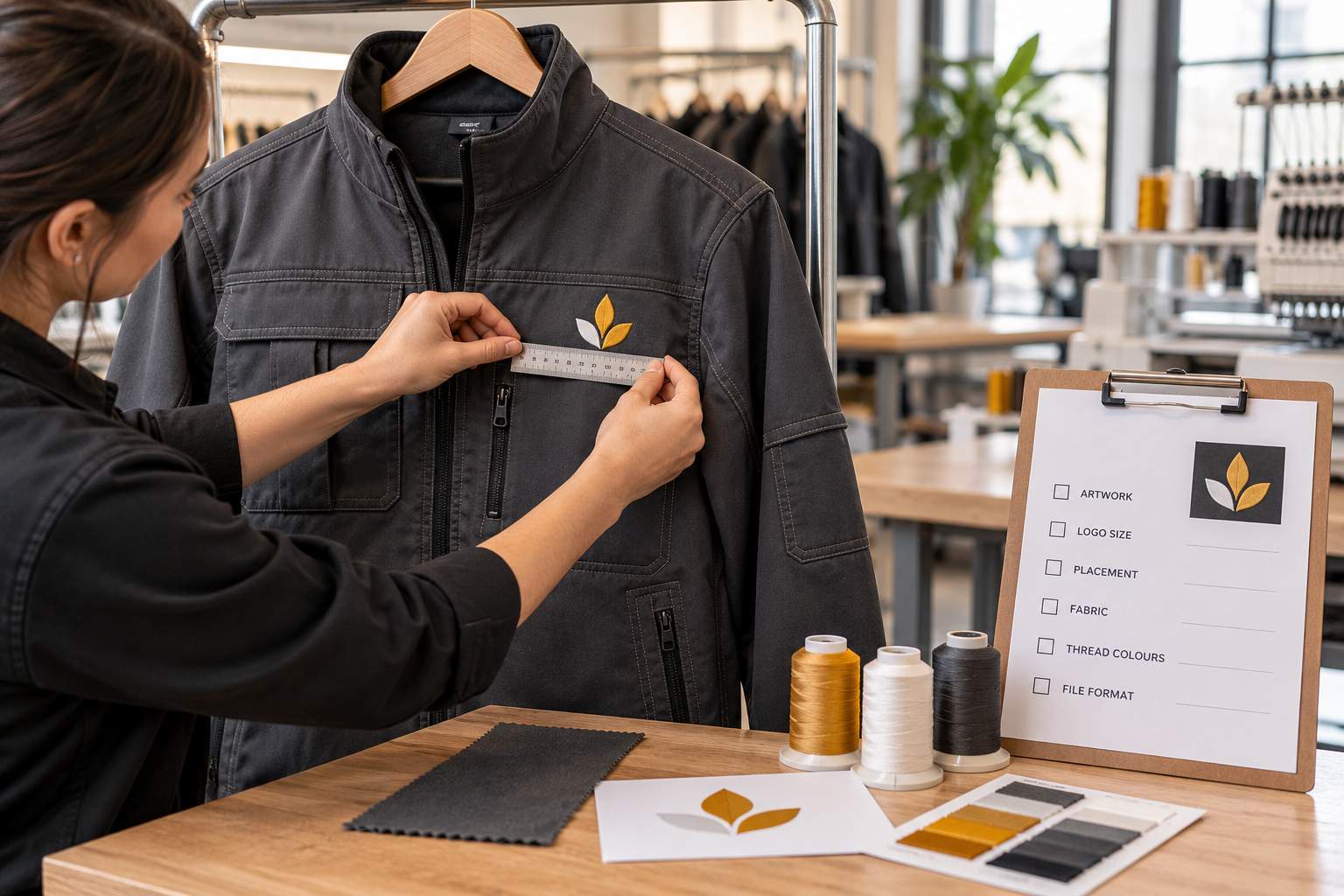
Give the intended embroidery width in inches or millimeters, and identify the placement on each item. If height is restricted, state that limit too. Let the supplier preserve the logo’s proportions when working within the available space.
Provide the product brand, style number, fabric, and garment color. For caps, include the exact style and whether the front is structured. For bags, mention seams, pockets, or lining that could affect access to the embroidery area.
An order containing polos and caps needs separate placement instructions. A logo that fits a shirt chest may need a different layout or stitch plan on a cap. Ask the supplier which items can share a file and which require another version before finalizing the quote.
For example, the customer might approve the full logo on polos and an icon on caps. Record both choices so the supplier does not have to guess which artwork belongs to each item.
Resolve small details before digitizing
Look at the logo at its intended physical size. Tiny slogans, thin outlines, and narrow gaps deserve attention because details that look clear on a large screen may become difficult to distinguish in thread.
Ask the supplier to flag anything that may need enlarging, thickening, or simplifying. For conventional embroidery, gradients and subtle shadows may need a simpler treatment. The practical limits depend on the lettering, thread, fabric, and equipment, so avoid promising a universal minimum text size.
Get the customer’s approval before changing the logo. If a tagline is essential, ask whether a larger placement would preserve it. If the customer approves a simplified version, save that artwork separately and clearly identify which products it applies to.
Agree on thread colors before sampling
Send the customer’s brand color references rather than describing colors as “dark blue” or “bright red.” Pantone references help the supplier choose from the thread range they actually use.
An exact match may not exist. Ask the supplier to identify the proposed thread brand and color numbers, and obtain approval for substitutions. For a color-sensitive order, review physical thread samples against the garment when possible. Screen previews can differ from real thread.
Check contrast on every garment color. A white logo on a navy polo may need a different approved color version on a white cap. Do not assume that approval for one background covers every item.
Confirm what the receiving supplier needs
Find out whether the embroidery supplier will digitize the artwork or expects you to provide the stitch file. If another company is digitizing it, confirm the receiving supplier’s required machine format first.
An artwork file and an embroidery file serve different purposes. Renaming a JPEG with a DST extension will not create stitching instructions. Send any existing stitch file with its original size, previous product details, and a photo of the earlier embroidery if available.
When arranging embroidery digitizing services through BitsNPixs, include the decorator’s required format alongside the approved artwork, product details, and finished dimensions. Ask the receiving supplier to review the file before scheduling production.
Keep the order brief in one place
Send one clearly labeled order brief rather than spreading instructions across forwarded emails. Include the purchase order reference, quantities by product, artwork version, and the details already agreed.
Identify who answers production questions and who gives final customer approval. Specify the sample approval deadline as well as the required delivery date. This gives the supplier time to flag concerns before the schedule becomes tight.
Ask whether the decoration quote is provisional until digitizing and sampling are complete. Design changes can affect the stitch count and production time. Confirm revision charges and file access terms early so the customer’s quote reflects the agreed scope.
Approve a stitched sample before production
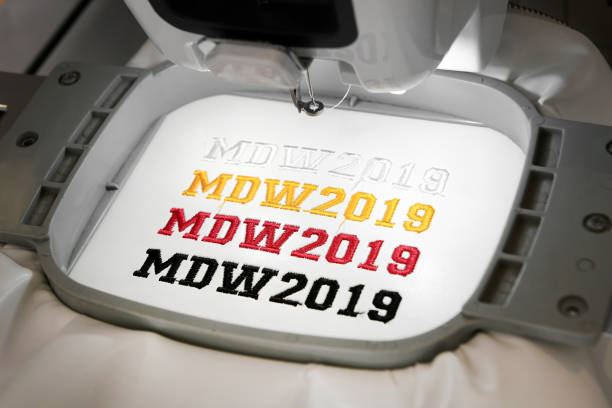
A digital mockup helps show placement. A stitch simulation shows the planned embroidery. Neither demonstrates how the actual fabric will behave under the needle.
Request a stitched sample on the intended product where practical. If the supplier uses another material, ask what differences remain untested. Inspect readable lettering, clean edges, color placement, and any visible fabric distortion. Check the embroidery at normal viewing distance as well as close up.
Separate customer approval of appearance from the supplier’s confirmation that the design runs reliably. If changes are needed, describe the problem precisely and request an updated sample. Record the approved file version and date before releasing the full order.
Save the approved details for reorders
Keep the original artwork, approved embroidery files, thread references, dimensions, sample photos, and supplier notes together. Use filenames that identify the customer, product, size, and revision rather than several files labeled “final.”
Before reusing a file, check whether the product, placement, size, or embroidery technique has changed. A successful previous order is a useful reference, but a different cap or fabric still needs the supplier’s review.
If the customer changes the logo after approval, send a written change request and confirm the effect on cost and timing. Release production only when the supplier has acknowledged the updated instructions and the customer has approved any visible changes.























































No Comments