


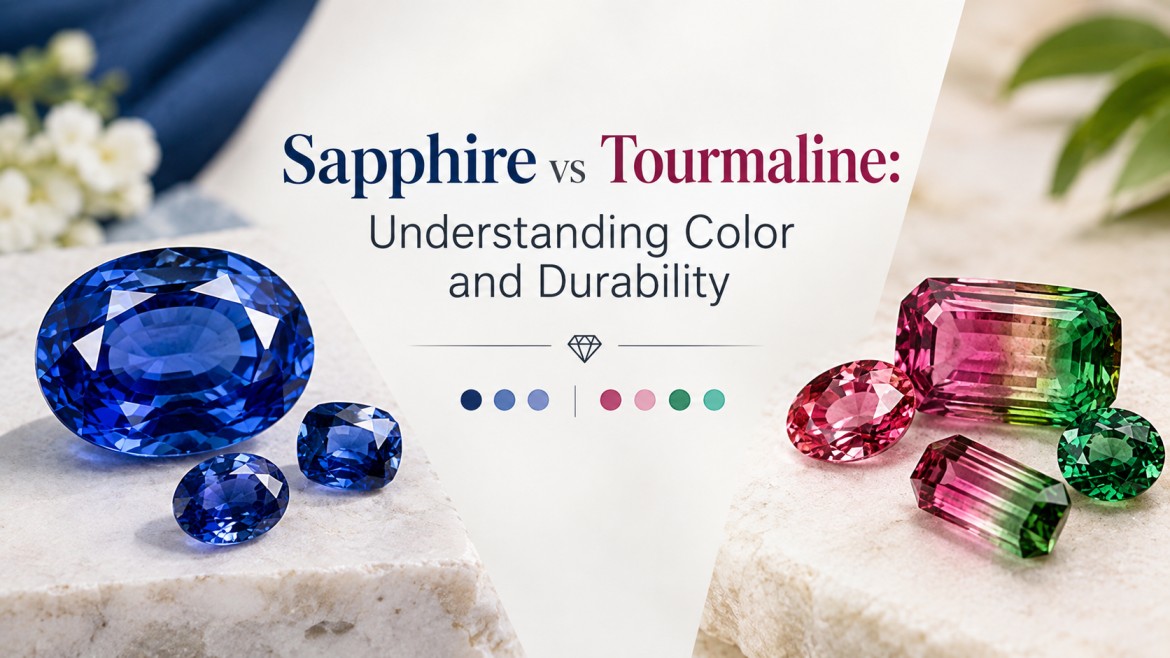
Color and durability are two important factors in selecting the right gemstone. Sapphire and tourmaline stone are both popular for jewelry, but they differ in physical properties, color ranges, and care. Knowing these differences can help you choose a gemstone that fits your style and lifestyle.
Maybe you want to buy a classic Blue sapphire or maybe you want a colorful Tourmaline stone or maybe a vibrant yellow sapphire. Before you go shopping you need to know what distinguishes these stones.
What Is Sapphire?
Sapphire is a variety of corundum, which is a mineral. Sapphire is often associated with a deep blue color, but it can be found in a range of colors including yellow, pink, green and others. Red corundum is classified as ruby, not as sapphire.
Blue Sapphire is particularly famous for its beautiful blue and strong durability. Its color ranges from pale blue to rich royal blue, depending on such factors as its origin, trace elements and treatment.
Yellow Sapphire
Another popular variety is yellow sapphire. It ranges from pale lemon yellow to deeper golden hues. Yellow sapphire is not only beautiful but also hard, so it’s a good choice for many kinds of jewelry.
What Is Tourmaline?
Tourmaline is a complex group of minerals, with an outstanding variety of colors. A Tourmaline can be green, pink, red, blue, yellow, brown, or even have multiple colors in the same crystal.
One of the greatest attractions of tourmaline is the diversity of color. Some varieties such as Paraíba tourmaline are especially noted for lively blue-green or neon-like colors.
Sapphire and Tourmaline: The Difference in Colors
One of the easiest ways to distinguish these gemstones is by color.
Feature Sapphire Tourmaline:
Typical colors Blue Yellow Pink Green Yellow Red Blue Pink Green Multicolor
Different Colors Wide Very broad
Shades of Blue Classic and hearty Brightly or unusually often
Multicolor look Not that often present in some types
Color attractiveness Classic and Chic Bright and different
Sapphire is generally more classic and refined in appearance, while tourmaline offers more variety for those who like unusual colors and combinations.
What’s Harder Than A Gemstone?
Durability is another important factor when picking out jewelry. Sapphire is 9 on the Mohs hardness scale making it one of the hardest natural gemstones other than diamond. This makes sapphire particularly well-suited for rings and other jewelry items subjected to everyday wear.
Tourmaline is generally in the 7 to 7.5 range on the Mohs scale. This provides good durability, but is softer than sapphire and may require a little more care, especially on rings.
For example, if you are looking for a daily wear ring then Blue sapphire ring would be perfect choice as sapphire offers excellent scratch resistance. But proper care is still important because hardness doesn’t make a gemstone completely chip or damage proof.
Sapphire as Everyday Jewelry
Sapphire’s hardness makes it a practical gemstone for engagement rings, everyday rings, earrings and pendants. Its timeless look also pairs well with different metals like yellow gold, white gold, platinum and silver.
A Blue sapphire ring can add a classy touch while a yellow sapphire provides for a warmer and a more unique look.
Tourmaline for the Jewelry Lover
Tourmaline is particularly attractive to buyers looking for uniqueness. It comes in so many colors that it can match a wide range of personal styles.
Common choices of pink and green tourmalines can give a stunning look with multicolored crystals. But tourmaline is not as hard as sapphire, so rings with tourmaline need to be treated with care.
How to Care for Sapphire and Tourmaline
If taken care of correctly, both stones can remain beautiful for years.
Sapphire care
Use mild soap and warm water to clean sapphire jewelry.
Do not expose the treated stones to extreme conditions without consulting a professional first.
Store each piece separately to avoid scratching.
Get your valuable jewelry checked by a professional on a regular basis.
Caring for Tourmaline
Be gentle when cleaning.
Avoid extreme temperature changes and harsh chemicals.
Store tourmaline jewelry separately from harder stones.
Remove rings when engaging in activities that may cause impact.
Which one to go for?
It all comes down to what’s important to you. Sapphire or tourmaline? Sapphire has a good mix of these characteristics, if durability, classic color and everyday wear are your priorities. If you want a broad spectrum of colors and a more individual look, tourmaline has many interesting choices for you.
Ultimately, before you buy, you should consider the gemstone quality, cut, clarity, color, treatment and craftsmanship. A trusted jeweler and an independent gem report can also help you know exactly what you’re buying.
Final Thoughts
Sapphire and tourmaline each have their virtues. Sapphire is known for its durability and classic appearance . Tourmaline is known for its broad spectrum of colors .
A sophisticated Blue sapphire, a warm yellow sapphire or a vibrant Tourmaline stone, each gem can bring a different character to jewelry. Comparing color, durability, care requirements and personal style can help you make a more informed choice for your collection.

