


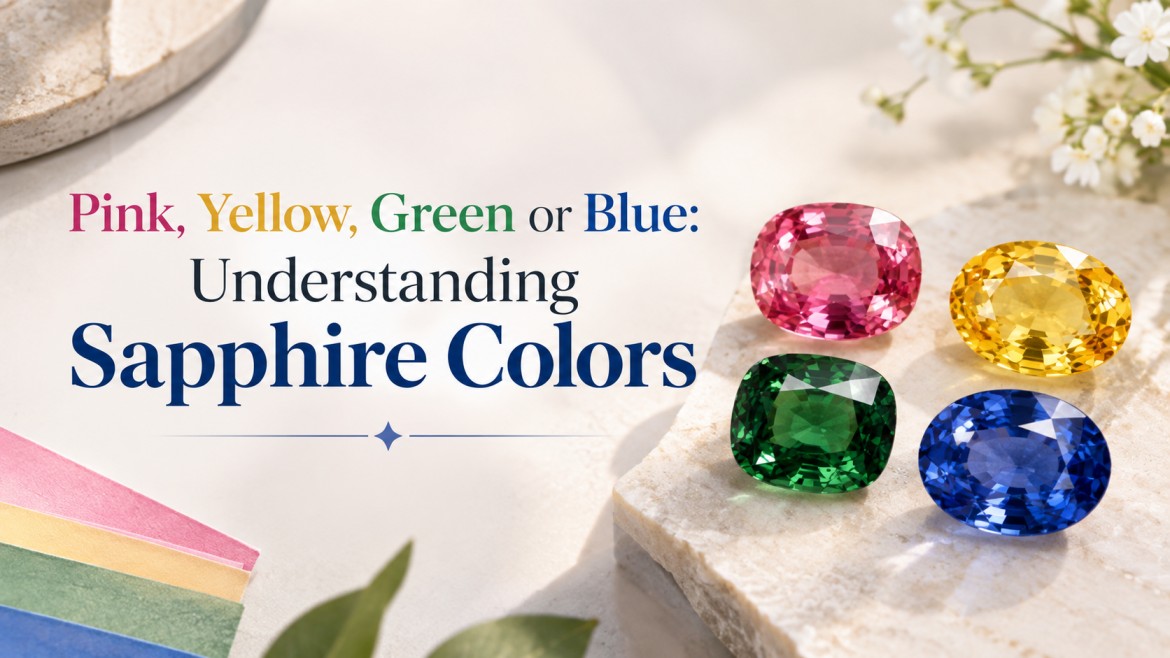
Sapphires are among the most prized gemstones in the world, valued for their durability, brilliance and a stunning range of colors. When you hear the word sapphire, a lot of people automatically think of a rich blue gemstone, but this family of gemstones has so much more to offer than traditional blue. Pink, yellow, green, orange and even color-changing sapphires have beautiful natural colors.
All sapphires are members of the mineral family corundum. Pure corundum is colorless. The various colors found in natural sapphires are caused by trace elements. This means that color is not merely a cosmetic feature of a gemstone, but can reveal important information on the gemstone’s identity, rarity and value.
Blue Sapphire: The Old Favorite
The best known sapphire variety is perhaps blue sapphire. It can be a delicate light blue or an intense royal or deep blue. The color is generally due to small quantities of iron and titanium in the corundum crystal.
High-quality blue sapphire are usually very vivid in color, with good transparency and attractive brilliance stones from different geographical areas may also have distinctive appearances. For example, sapphires from Kashmir have historically been known for their velvety blue appearance, whereas sapphires from Sri Lanka have been known for a wide range of blue hues.
Blue sapphire is also very popular in jewelry as sapphire is a 9 on the Mohs hardness scale and can be used for rings, earrings, pendants and other pieces intended for everyday wear.
Pink Sapphire: Royal and Romantic
Pink sapphire offers a softer alternative to the traditional blue. It can be a very pale pink or a bright hot pink. The pink color is mainly due to chromium, but the exact shade depends on the concentration of trace elements and the geological formation of the gemstone.
Pink sapphires are a favorite for engagement rings and modern jewelry. Yellow and white metals both work well with their romantic look, and larger stones can be a dramatic centerpiece.
Pink sapphire is a type of corundum, just as ruby is. But unlike ruby, pink sapphire usually comes in a different range of colors. Sometimes the difference between pink sapphire and ruby can be subjective, so professional gemological identification is important for valuable stones.
Yellow Sapphire: Bright and Warm
Yellow sapphire is appreciated for its cheerful golden look. Its color varies from pale lemon and soft yellow to rich gold. Iron is one of the trace elements linked to yellow coloration.
Yellow sapphire is very popular in South Asian jewelry and is commonly referred to as Pukhraj in traditional Indian astrology. In addition to its cultural value, it also has great jewelry appeal as its warm color complements gold and diamonds beautifully.
When buying a yellow sapphire, the buyer should look at the color saturation, clarity, cut, carat weight, origin and treatment. A vivid and attractive color with good transparency is especially attractive.
Green Sapphire: An Underrated Beauty
Green sapphire is rarer than its blue or yellow cousins making it an interesting choice for collectors and jewelry lovers. It can be anywhere from a subtle olive and yellowish green to deeper forest like colors.
The green coloration is often associated with iron in sapphire. Green sapphires tend to have a bit more of an understated look than emeralds, which can be perfect for people who prefer natural looking, earthy gemstone colors.
In mainstream jewelry, green sapphire is not as common as some other colored gemstones and can be an interesting alternative choice.
Padparadscha Sapphire: A Unique Combination
Padparadscha sapphire is one of the most unique and most sought after types of sapphire. The name is often associated with a delicate pairing of pink and orange, reminiscent of a sunset or lotus blossom.
The color of genuine Padparadscha sapphires is rare and difficult to reproduce in nature, which makes them particularly desirable. Historically Sri Lanka has been an important source, though stones with similar characteristics can be found elsewhere.
Laboratory identification can be especially helpful when buying a valuable stone, as Padparadscha sapphire color definition is critical. Treatment, origin and the precise ratio of pink to orange can all make a significant difference in market value.
What Is Sapphire Blue Made Of?
Trace elements present during the formation of the crystal determine the color of sapphire. But color is not the only thing that affects the appearance or value of a gemstone.
Important issues are:
Hue: The base color of the stone.
Tone: How light or dark the color looks.
Saturation: The intensity or strength of the color.
Clarity: The number & visibility of inclusions.
Cut: how well the gem reflects light.
Carat Weight: Larger fine quality stones can be much rarer.
Treatment: The value and disclosure requirements may be affected by heat treatment and other processes.
Origin: For some rare or historically important sapphires, geographic origin can be a significant consideration.
Selecting the Correct Sapphire Color
The perfect sapphire color is a matter of personal taste, jewelry design, budget and the features you want. Blue is forever. Pink is romantic. Yellow sapphire adds warmth and brightness; green sapphire offers a more rare natural look.
Padparadscha Sapphire is one of the most recognizable and specialized color categories of sapphire and is a favorite among collectors in search of something especially unique.
Buyers of any color should ask for accurate treatment information and, particularly in the case of expensive stones, should consider an independent gemological report. A good laboratory can help to confirm whether the stone is natural, detect any treatments and give information about its properties.
Concluding remarks
Sapphire is a lot more colorful than its traditional blue image might suggest. From classic Blue sapphire and fiery yellow sapphire to earthy Green sapphire and rare Padparadscha Sapphire, each shade has its own visual character and appeal.
Understanding hue, tone, saturation, clarity, treatment, and origin will enable you to better distinguish between the different types of sapphires. Whether you’re looking for a statement ring, engagement gemstone or building a collection, learning about sapphire colors is the first step to a more informed choice.

