


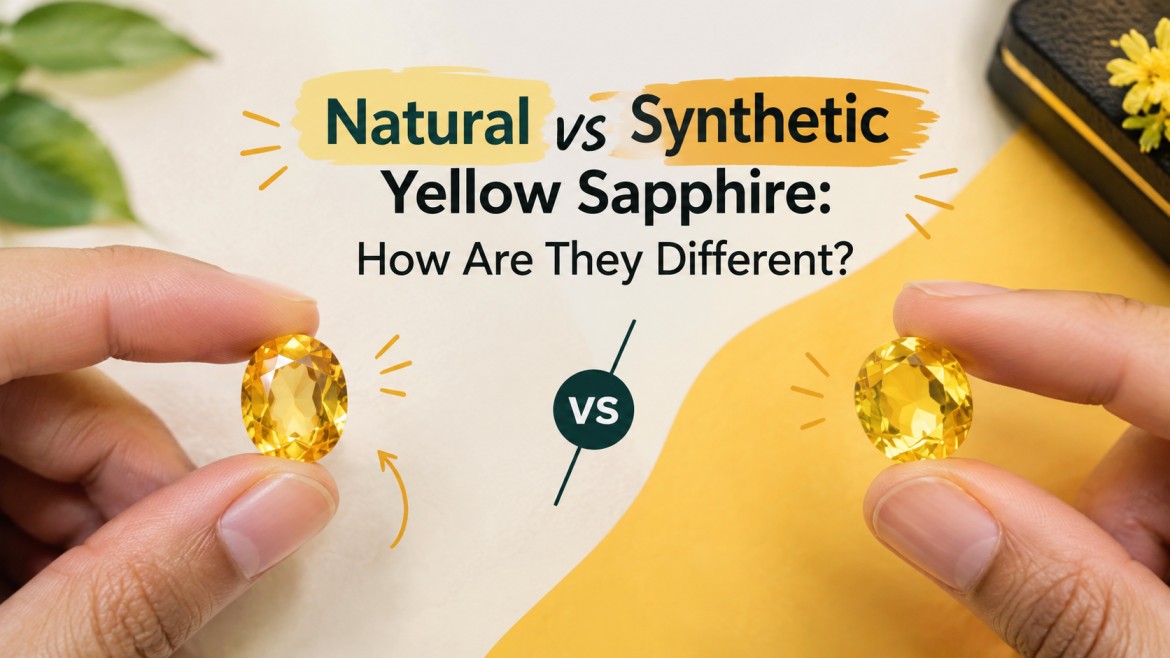
Yellow sapphire is one of the most popular gemstones in fine jewelry and traditional astrology. Known as Pukhraj stone, it is valued for its bright yellow color, durability and distinctive look. While buying yellow sapphire stones, there are two types available, natural and synthetic.
Natural sapphires and synthetic sapphires may look strikingly alike but are distinct in origin, rarity, value, inclusions and sometimes treatment history. Understanding the differences can help you make a more informed purchase.
Natural Yellow Sapphire
A natural yellow sapphire is formed naturally inside the Earth over thousands or millions of years. It is part of the corundum family of minerals, of which ruby is another example. It is usually yellow in color due to trace elements such as iron.
Natural stones may contain microscopic inclusions formed during their geological development. These inclusions are not necessarily flaws. In fact, gemologists can sometimes use them to help determine whether a gemstone is natural or lab-created.
Sri Lanka is especially famous for yellow sapphires, but stones also come from other gemstone-producing areas.
What is Synthetic Yellow Sapphire?
A synthetic yellow sapphire is manufactured in a laboratory and not found naturally underground. It is composed of the same basic chemical structure and crystal structure as natural sapphire, but is grown under human control.
Because synthetic sapphires can be manufactured more efficiently, they are generally much more affordable than similar natural stones.
Importantly, synthetic does not mean fake or imitation glass. A synthetic sapphire is a sapphire grown in a laboratory. Alternatively, a copy can be made of something entirely different.
Natural Yellow Sapphire vs Synthetic Yellow Sapphire: What’s the Difference?
Feature: Natural Yellow Sapphire Synthetic Yellow Sapphire
Origin Naturally formed underground Cultivated in a lab
Rarity Relatively rare More readily produced
Inclusions Often has natural inclusions May show laboratory-related growth features
Price Higher usually Generally lower
Appearance Can have unique color and character Can appear very clean and consistent
Availability Depends on natural supply More readily available
Identification Requires gemological examination Can be identified through testing
What’s the difference between them?
For an inexperienced buyer, distinguishing natural yellow sapphire from synthetic yellow sapphire is not always easy at first glance. Both can exhibit attractive yellow hues and high transparency.
Natural gemstones, in contrast, tend to have slight variations of color and internal characteristics. Synthetic stone may look very clean or show characteristic growth patterns when viewed under magnification.
This is why the look of a yellow sapphire stone should not be the only factor for its authentication.
Why is Natural Pukhraj Stone More Expensive?
The value of a Pukhraj stone is determined by factors such as color, clarity, carat weight, cut, origin and treatment status.
Natural yellow sapphires are constrained by geological supply. A good quality natural stone with good transparency and an attractive color can therefore command a significant premium.
Lab-grown stones are not as rare as natural ones, but they’re a practical option for shoppers who care most about how yellow sapphire looks but want to spend less money on it.
In traditional Vedic astrology Pukhraj stone is associated with Jupiter or Guru. Some astrologers recommend natural yellow sapphire for astrological purposes because this stone is traditionally considered a naturally formed gemstone.
But again these astrological arguments are based on tradition, not science. If you are buying a gemstone specifically for astrology, be especially sure to know exactly what type of stone you are buying and if it has been treated or lab-grown.
Can You Tell the Difference at Home?
A simple visual inspection will not reveal whether a yellow sapphire is natural or synthetic.
Inclusions or growth features can be seen under a magnifying glass, but to correctly identify them requires gemological expertise. Some of the more sophisticated synthetic stones can look very real.
If you are buying something of value, the safest way is to obtain an independent gemological report from a reputable laboratory. The report can determine if the gemstone is natural or lab-grown, and may also reveal any detectable treatments.
Natural Yellow Sapphire Treatment Effect
Treatment is another big thing to consider too. Some sapphires are treated, for example by heating, to improve their color or clarity.
A treated natural sapphire is natural in origin, but its treatment status can affect its market value. So buyers should not just ask whether a stone is “natural.” They should also inquire whether it has been treated.
With a proper certificate the distinction can be made much clearer.
Which One Should You Purchase?
If you care about natural origin, rarity, collectability and traditional gemstone value, go for a natural yellow sapphire.
If you just want a pretty yellow stone and don’t care about the price, a synthetic yellow sapphire could be used.
Whatever you decide, don’t just take a seller at his word. Make sure you read the gemstone documentation, treatment disclosure and return policy before buying.
Last Tips for Buying
Things to Keep in Mind While Buying Yellow Sapphire Stone:
Ask if the stone is natural or synthetic.
See if any treatments have been disclosed.
Get a good gemological certificate for precious stones.
Compare: Color, Clarity, Cut, and Carat Weight
And don’t assume that a “perfect” stone is a better stone.
Check out the seller’s return and exchange policy.
Compare prices according to quality, not size.
The end of the story
Natural and synthetic yellow sapphires can look surprisingly similar, but they have very different origins and market attributes. Natural yellow sapphire is a product of nature and limited by geology, synthetic sapphire is grown in the laboratory and is generally more available.
For buyers wanting to purchase a Pukhraj stone, it is very important to know the origin, treatment, certification and quality. Whether you choose natural or synthetic, shopping with accurate information will help you avoid confusion and select a yellow sapphire stone that meets your needs and budget.

