


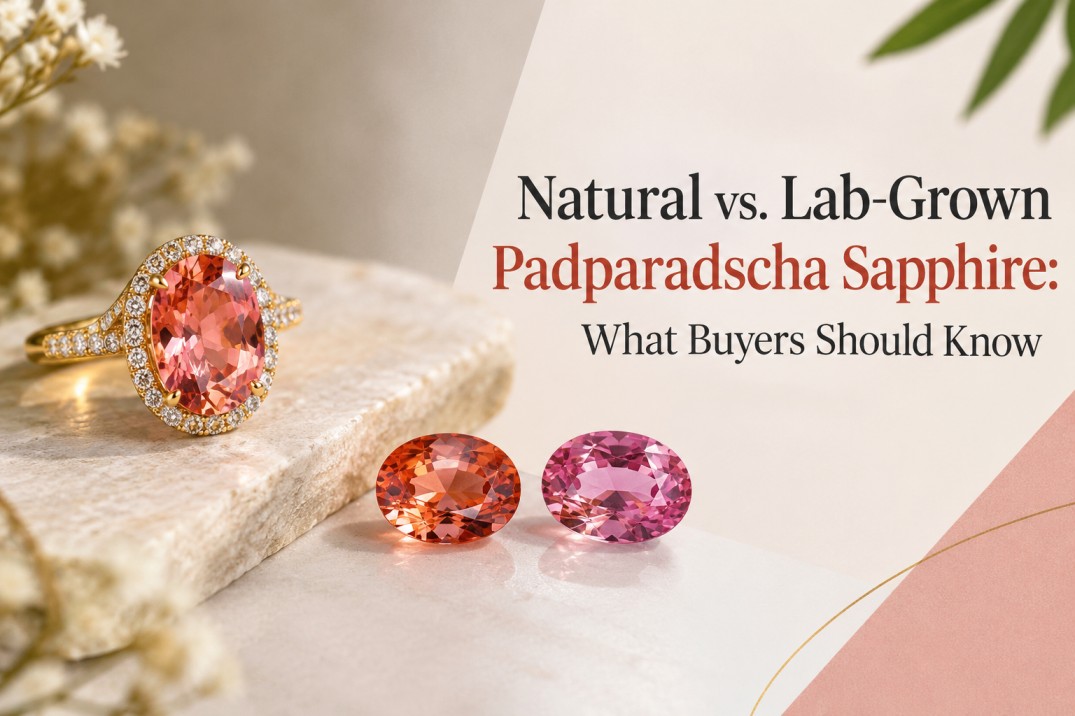
Padparadscha sapphire is a rare type of sapphire with a subtle blend of pink and orange hues. Buyers can choose from natural gemstones that are formed in the Earth, or lab-created sapphires that are made in a controlled, laboratory environment.
Knowing the differences in origin, price, scarcity and long-term value will help you to make the right choice for your budget and tastes.
1. Natural Padparadscha Sapphire, What It Is?
A natural padparadscha sapphire is formed underground over millions of years. Its distinctive pinkish-orange to orangish-pink color makes it a highly sought after gem for collectors and fine jewelry consumers.
Origin: Naturally occurring in the earth.
Appearance: Pink-orange tones, soft, with variations in hue and intensity.
Rarity: Fine quality stones are extremely rare.
Price: Varies with color, clarity, carat weight, origin and treatment.
2. What is a lab-created Padparadscha Sapphire?
The Padparadscha sapphire stone produced in the laboratory is obtained by complex laboratory methods that reproduce the conditions for the formation of sapphire crystals.
Source: Lab-grown, not mined.
Appearance: It can be very similar to natural sapphire in color and clarity.
Availability: Usually easier to find in matching sizes and colors.
Price: Usually more economical than similar natural stones.
Lab-grown sapphires are chemically and structurally essentially the same as natural sapphires. They differ however in origin, market rarity and resale value.
3. Natural vs Lab-grown Padparadscha Sapphire: Major Differences
Feature Natural Sapphire Lab-Grown Sapphire
Origin formed in earth Lab-created
Rare Rare, fine quality stone easier to make
Appearance Natural color may vary in color and inclusions Usually uniform in color and clarity
Cost Generally more Usually lower
Collectability Greater appeal to gemstone collectors Primarily valued for beauty and jewelry use
Resale value Market demand and quality More restrictive in general
Certification Confirms identity and therapies Assists in confirming laboratory-grown origin
4. Which Padparadscha Sapphire Is Costlier?
Natural Padparadscha sapphire usually cost a lot more than their lab-created counterparts. They are priced higher because they are rare and in demand by collectors.
Final cost depends on:
Color: A nice balance of pink-orange color is especially desirable.
Clarity: Visible inclusions may affect value.
Carat weight: Larger fine-quality stones often cost more.
Treatment: Heat treatment and other enhancements can have an impact on pricing.
Certification: Independent gemological reports to help buyers know what they are buying.
Lab-grown stones are a practical option for buyers who want the Padparadscha look but without paying the premium for a rare natural gemstone.
5. How to tell natural from lab-grown padparadscha sapphire
By looks you can’t tell the two apart at least. To the naked eye, they can appear strikingly similar.
Before you buy:
Ask for a gemological report: Choose an independent lab that specializes in identifying sapphires.
Verify the source disclosure: Check the stone to see if it is natural or lab-grown.
Ask about the treatments: Ask for a written disclosure of any known enhancements.
Check the report: Confirm the report with the lab that issued it and compare the report details to the gemstone.
Want to learn more about gems? Visit the Gemological Institute of America (GIA).
6. Which One Should I Get?
If rarity, natural origin and collector appeal are your priorities, choose a natural Padparadscha sapphire.
If you want a pretty pink-orange sapphire but are looking for a more affordable option, opt for a lab-grown padparadscha sapphire.
Both can be used for engagement rings or day-to-day jewelry. Sapphire has a Mohs hardness score of 9, which means it’s tough and a good choice for everyday wear. but proper settings and routine care are still important.
Most frequently asked questions (FAQs)
- Are lab grown padparadscha sapphires real?
“Yeah. It is a true sapphire, grown in a laboratory and having virtually the same chemical composition and crystal structure as a natural sapphire.
- Why is natural Padparadscha sapphire more costly?
Natural stones are generally more costly because of their scarcity, desirable color, quality and collector demand.
- Can you tell the difference just by looking at the gemstone?
Not with certainty usually. The best way to tell natural sapphire from lab-grown sapphire is through gemological testing.
- Should you resell lab-grown Padparadscha sapphires?
They can have a resale value but usually that is more limited than for similar natural stones. Value is a function of quality and marketability.
- Is natural Padparadscha sapphire necessarily untreated?
No. Some natural sapphires are treated to enhance their beauty. Request disclosure of known treatments.
- What is the best Padparadscha sapphire for jewelry?
Both are good for jewelry. It is contingent upon your budget, where you want your watch from, the design and more importantly if you care about rarity or affordability.
Summary
The main difference between natural and lab grown Padparadscha sapphire is the origin, rarity and price. From a geological perspective, natural stones are rare and therefore attract collectors. Lab grown stones give similar beauty for less money. Always check the gemstone identification, treatment disclosures and certification before purchase.

