


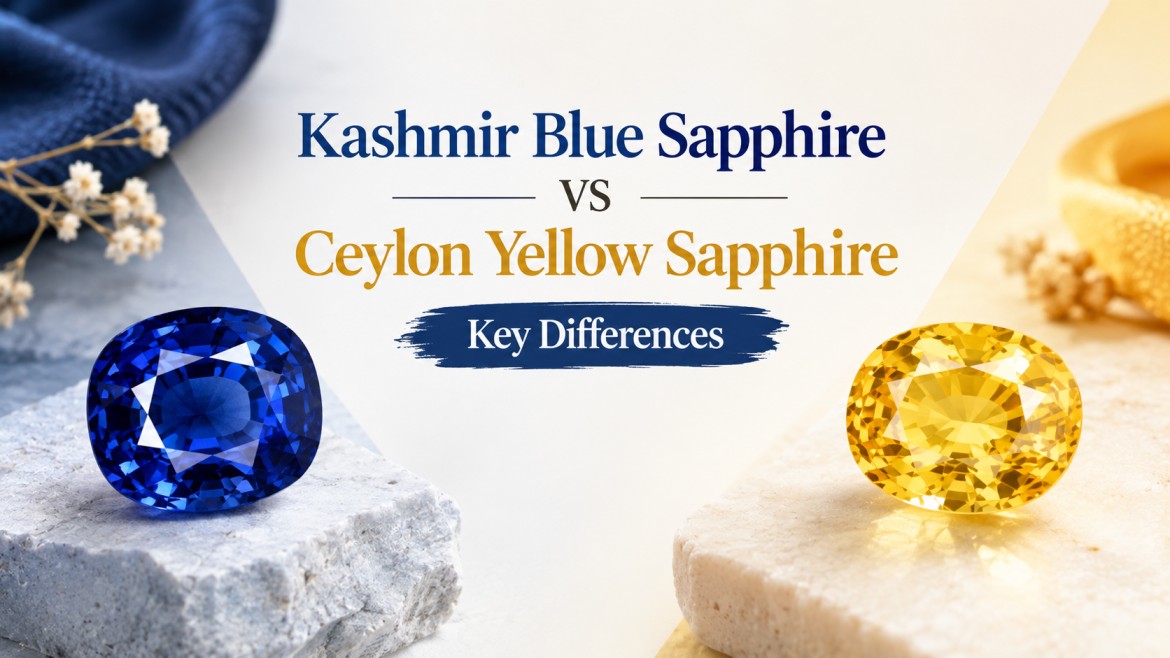
Kashmir Blue Sapphire and Ceylon Yellow Sapphire are two precious stones that vary in terms of color, origin, rarity and traditional astrological significance. They are both members of the corundum family of minerals, but they vary quite a lot in appearance and symbolism.
Knowing these differences can help you make a more educated purchase if you are buying a gemstone for jewelry or collecting, or for traditional astrology.
1. What is Kashmir Sapphire?
Kashmir Blue Sapphire is a very rare variety of blue sapphire that has been associated historically with the Kashmir region of the Indian subcontinent. Fine stones are known for their velvety look and deep blue color.
The best examples can have an appealing combination of saturation, transparency and a soft visual texture. There are some Kashmir sapphires in the collector market that fetch big prices because good material is very rare.
2. Yellow Sapphire of Ceylon
Ceylon Yellow Sapphire is from Sri Lanka (previously Ceylon). Sri Lanka has been an important source of sapphires in different colors for a long time.
A fine Ceylon yellow sapphire will display attractive yellow, golden-yellow or slightly orangish-yellow tones. The worth of a diamond is based on many things like its color, clarity, size, cut, treatment status and overall quality.
Unlike the Kashmir blue sapphire, this yellow sapphire is frequently bought for jewelry as well as traditional astrological purposes.
3. Main color difference
The biggest difference is the color.
Feature Kashmir Blue Sapphire Ceylon Yellow Sapphire
main color Blue Yellow to Gold Yellow
Mineral group Corundum Corundum
Traditional Name Neelam Pukhraj
Visual appeal Deep, rich blue Bright, warm yellow
Common jewelry Rings, pendants Rings, pendants, earring
Kashmir stones are particularly prized for their deep blue color, while Ceylon stones are appreciated for their beautiful yellow shades and brilliance.
4. Rarity and provenance
The source of the stone can have a big impact on value. The historic Kashmir sapphire mines are known for their production of beautiful blue stones, but fine quality material from the original location is very rare.
Sri Lanka, however, remains a historically important source of sapphires, including yellow sapphire. The availability of Ceylon material on a larger commercial market gives buyers the opportunity to choose from a wider range of qualities and sizes.
However the provenance should always be independently verified rather than taken as read from the sellers description.
5. Price of Kashmir Blue Sapphire Vs Ceylon Yellow Sapphire
Kashmir Blue Sapphire price can vary widely because fine, documented material is so rare. Provenance, color quality, clarity, carat weight, treatment status, and laboratory documentation can all have a significant impact on value.
The price of Ceylon yellow sapphire depends on color, clarity, carat weight, cut, treatment and certification. An untreated big, colorful gem can be worth much more than a lower quality or treated gem.
So merely considering the carat price isn’t enough.
6. Processing and certification
Another important consideration is treatment. Sapphire may be treated to enhance its appearance and these treatments can affect market value.
For either gem, inquire whether the stone is natural or synthetic, and whether it has been treated in any way. For expensive stones, an independent report from a reputable gemological laboratory can be useful in establishing identity and treatment.
7. Contradictions in the Horoscope
In Vedic astrology, blue sapphire is traditionally associated with Saturn (Shani) and yellow sapphire is traditionally associated with Jupiter (Guru).
These are different astrological traditions and the stones should not be used interchangeably. If you are considering purchasing gemstones for astrological purposes, you might want to consult with a qualified practitioner before you buy.
8. Which is better for jewelry?
It is contingent upon your style and why you’re buying.
Kashmir Blue Sapphire may appeal to collectors and jewelry buyers seeking an extremely rare blue gemstone with a historical background. If you like warm yellow shades and traditional gold jewelry, Ceylon Yellow Sapphire could be a good option.
Either can make a beautiful center stone when cut and set properly.
9. Final buying advice
Before you purchase either gemstone:
If possible have the gemstone verified for identity and origin.
Inquire about disclosure of treatment.
Check out the lab report for expensive stones.
Don’t just compare carat weight; compare color and clarity.
Buy from a reputable vendor.
And remember: high price does not always mean high quality.
Conclusions
Kashmir Blue Sapphire and Ceylon Yellow Sapphire are both members of the corundum family, but they are quite different in terms of color, origin, rarity, market traits and traditional astrological associations. Srilankan yellow sapphire is valued for its pleasing yellow tones and its Sri Lankan origin. Kashmir material is particularly prized for its historical rarity and its blue color.
Verified identity, treatment status, quality, documentation and provenance are the most important things for buyers. These characteristics can make it easier to evaluate a gemstone beyond its appearance or advertised price.

