


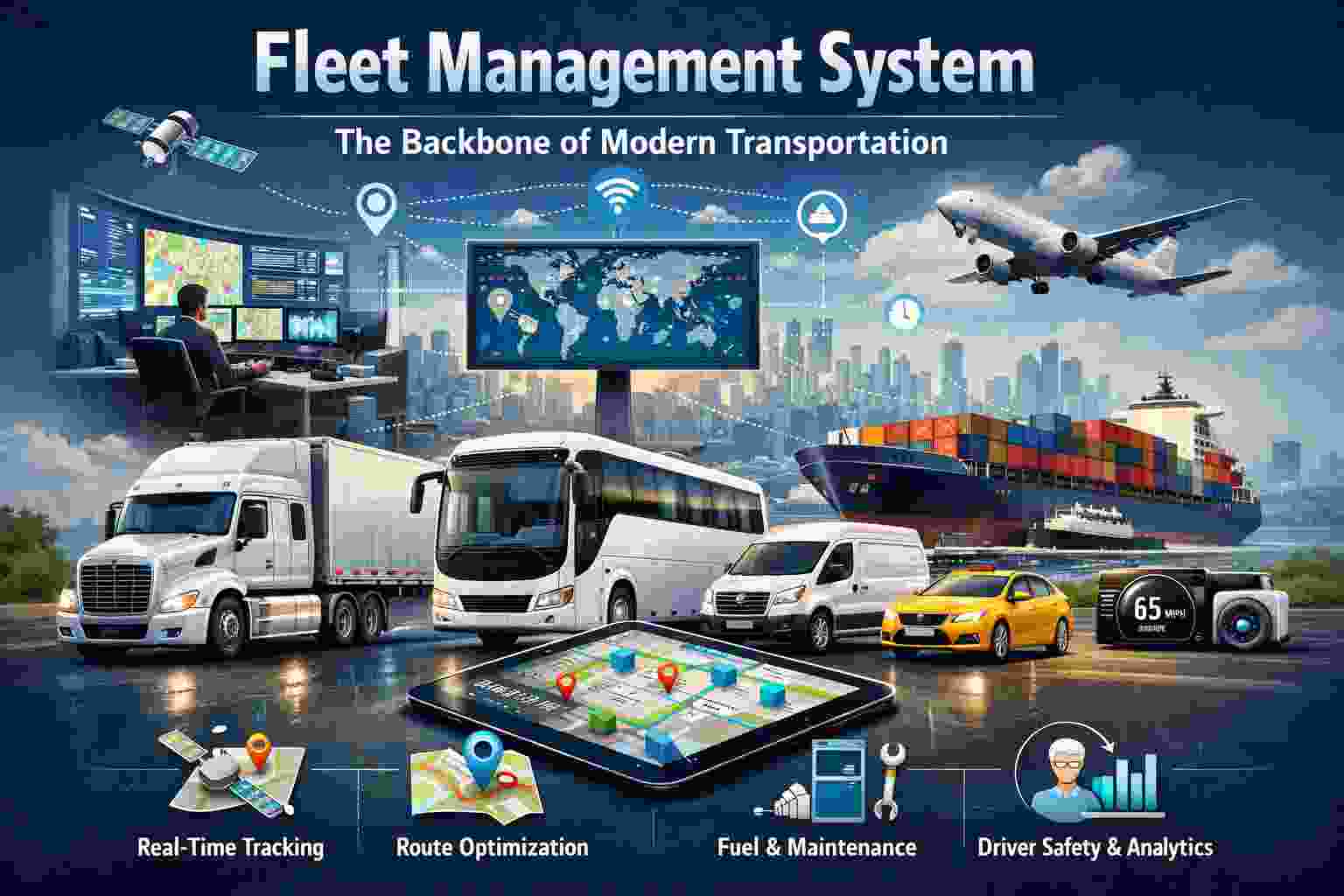
A fleet management system is a powerful solution designed to help businesses efficiently manage their vehicles, drivers, fuel consumption, and overall transportation operations. As industries such as logistics, delivery, construction, and public transportation expand, managing fleets manually has become inefficient and costly. This is where fleet management systems play a critical role.
What is a Fleet Management System?
A fleet management system is a digital platform that integrates GPS tracking, telematics, and data analytics to monitor and control fleet operations. It allows fleet managers to track vehicles in real time, analyze driver performance, optimize routes, and reduce operational expenses.
The system typically includes:
-
GPS tracking devices installed in vehicles
-
Fleet management software (web or mobile-based)
-
Reporting and analytics tools
Key Features of a Fleet Management System
Modern fleet management solutions offer advanced tools to streamline operations:
Real-Time Tracking
Monitor vehicle locations instantly through live maps.
Route Optimization
Suggest efficient routes to reduce travel time and fuel consumption.
Fuel Monitoring
Track fuel usage and detect fuel theft or wastage.
Maintenance Scheduling
Receive alerts for vehicle servicing and preventive maintenance.
Driver Behavior Monitoring
Track overspeeding, harsh braking, and idle time.
Geofencing
Set virtual boundaries and receive alerts when vehicles enter or exit specific areas.
Benefits of Implementing a Fleet Management System
1. Cost Reduction
Fuel and maintenance are major expenses. Monitoring and analytics help reduce unnecessary spending.
2. Improved Productivity
Drivers follow optimized routes, leading to faster deliveries and better service.
3. Enhanced Safety
Monitoring driving behavior reduces accidents and promotes responsible driving.
4. Better Compliance
Helps businesses comply with government transportation regulations.
5. Increased Customer Satisfaction
Real-time tracking enables accurate delivery updates.
Industries That Benefit from Fleet Management
-
Logistics and transportation
-
Courier and delivery services
-
Construction companies
-
School bus operators
-
Oil and gas companies
-
Public transport authorities
Any business that operates multiple vehicles can benefit from a fleet management system.
Role of Data in Fleet Management
Data is the backbone of fleet optimization. Fleet management software provides detailed reports on:
-
Daily mileage
-
Fuel consumption
-
Driver performance
-
Idle time
-
Vehicle usage
These insights allow managers to make informed decisions and improve efficiency.
Cloud-Based Fleet Management
Modern fleet systems are cloud-enabled, offering:
-
Remote access from anywhere
-
Secure data storage
-
Automated reporting
-
Mobile app monitoring
This flexibility ensures managers can monitor fleet operations even outside office hours.
ROI of Fleet Management Systems
Many businesses see a return on investment within a few months due to:
-
Reduced fuel costs
-
Lower maintenance expenses
-
Improved vehicle lifespan
-
Decreased accident rates
By minimizing inefficiencies, companies significantly increase profitability.
The Future of Fleet Management
With AI and IoT integration, fleet management systems are becoming more intelligent. Predictive maintenance, AI-driven route planning, and automated compliance reporting are shaping the future of fleet operations.
In the coming years, fleet automation and electric vehicle integration will further transform the industry.
Conclusion
A fleet management system is no longer optional for growing businesses. It improves efficiency, enhances safety, reduces costs, and provides complete control over fleet operations. Companies that adopt smart fleet technology gain a competitive advantage in today’s demanding transportation landscape.

