


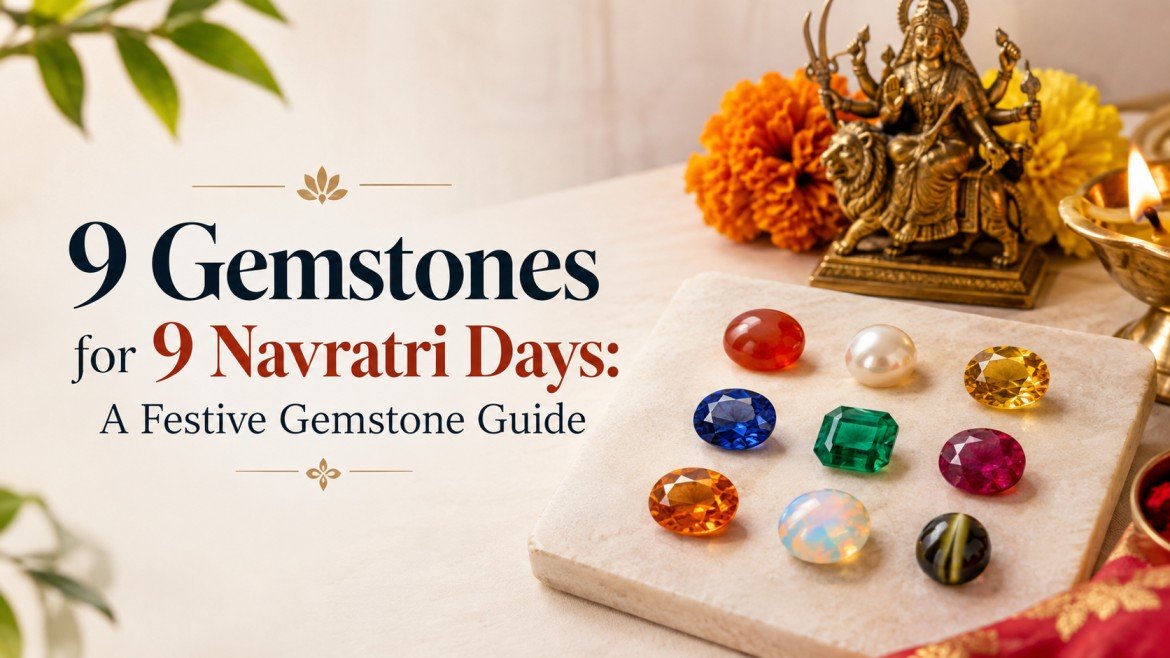
Navratri is a vibrant nine-day festival that is full of devotion, traditional rituals, colorful clothes and spiritual practices. Each day of Navratri is devoted to a different form of Goddess Durga, and many devotees also associate these days with particular colors, planetary energies and gemstones. So a 9 gemstone theme could be a meaningful addition to holiday jewelry and parties.
The rubies and emeralds, the blue sapphires and yellow sapphires, each has its own color, its own history, its own symbolism, its own place in the Indian traditions of gem stones. While gemstone astrology may be more traditional than scientific, the stones themselves remain very popular for their beauty and cultural value.
Day 1 – Ruby, the Symbol of Power
Day one venerates Maa Shailputri and is traditionally associated with confidence, strength and fresh starts. Ruby’s bright red color is often linked to the Sun in Vedic gemstone traditions.
Ruby stone represents life force, leadership, courage and determination. A ruby ring, pendant or bracelet also goes well with traditional red and festive outfits.
Day 2 – Pearl: The Sign of Serenity
The second day is dedicated to Maa Brahmacharini and is associated with penance, devotion and inner peace. The Pearl is a classic symbol of the Moon.
Its soft white look makes it a graceful choice for Navratri jewelry. Symbolically, pearl is often connected to calmness, purity, emotional balance and serenity.
Day 3 – Red Coral: A Symbol of Courage
The third day is to worship Maa Chandraghanta, the embodiment of courage and protection. Red coral is traditionally associated with Mars and is very rich reddish-orange in color.
This is a great option if you like bold and traditional jewelry designs for this Navratri.
Day 4 – Emerald: The Symbol of Wisdom
The fourth day is devoted to Maa Kushmanda. Emerald stone is a stone of Mercury in traditional astrology. Its bright green color is prized.
The color green is also closely associated with growth and renewal, so the emerald is a popular gemstone in festive jewelry. In traditional astrology emerald is also linked with communication, learning, intelligence and creativity.
Day 5 – Yellow Sapphire: A Symbol of Wealth
The fifth day is dedicated to Maa Skandamata and is often associated with wisdom, nurturing energy and abundance. Yellow sapphire is ruled by the planet Jupiter.
Its golden-yellow color makes it especially suitable for festive jewelry. In traditional gem lore, yellow sapphire is the gem of wisdom, prosperity, knowledge and spiritual growth.
Day 6 – The Sign of Beauty: Diamond
The sixth day is dedicated to the worship of Maa Katyayani. Diamonds are traditionally associated with Venus and are recognized for their superior brilliance.
A diamond pendant, earrings or a ring can add that chic and modern touch to Navratri celebrations. Symbolically, diamonds are often associated with beauty, refinement, love and luxury.
Day 7: Blue Sapphire Discipline Sign
Day Seven: Maa Kalaratri is worshiped whose fierce form symbolizes protection and removal of negative forces. Blue sapphire is the traditional stone for Saturn.
Its deep blue color gives it a sophisticated look, while traditional astrology links it to discipline, responsibility, patience and perseverance. Blue sapphire is the most powerful astrological gemstone, and those wishing to use it for astrological reasons generally consult a qualified practitioner.
Day 8 – Hessonite Garnet: Transformation Stone
The eighth day is dedicated to Maa Mahagauri, the goddess of purity and transformation. The Hessonite garnet, commonly known as Gomed, is traditionally associated with Rahu.
It has a strange and unique look with honey, orange or brownish tones. In folklore, Gomed is associated with focus, confidence and removing obstacles.
Day 9 – Cat’s Eye: Symbol of Protection
The ninth day is known as Maa Siddhidatri and marks the end of Navratri. Cat’s eye or Lehsunia is traditionally associated with Ketu.
It is especially interesting because of the unique chatoyancy, or changing band of light across the gemstone. Traditionally, cat’s eye is associated with protection, intuition, and spiritual awareness.
How to Select Navratri Gemstone Jewelry
Picking a gemstone for Navratri is no rocket science. Think about the color of the stone, quality, design and how it goes with your traditional dress. When purchasing a gemstone for astrological reasons, authenticity and the advice of a professional are particularly important.
Always ensure that if you buy a valuable stone it is natural or treated and ask for a certificate from an independent laboratory.
Last Thoughts
The nine days of Navratri are a wonderful occasion to explore the cultural symbolism of gemstones. Each stone has its own look and traditional meaning, from fiery ruby to calming pearl, vibrant emerald, prosperous yellow sapphire and powerful blue sapphire.
Whether you wear these gemstones for their beauty, cultural value, or traditional astrological associations, they can add an elegant and meaningful element to your Navratri celebrations.

